
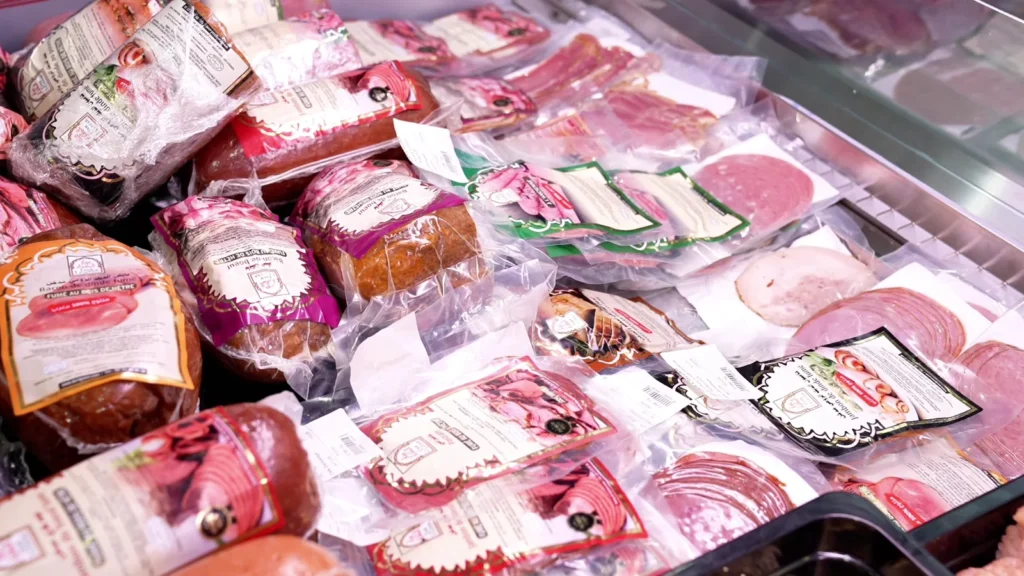
Sausages, merguez, seasoned minced meat, raw cured products, marinated skewers: ready-to-cook meat has earned a real place in our shopping baskets. It saves time, simplifies weekday meals and is easy to find in supermarkets.
Yet in front of the shelf, many people hesitate. When consumers are asked about their biggest concern when buying processed or ready-to-cook meat at the supermarket, the answers always come back to the same idea: you cannot see what is inside.
Unlike a whole cut of meat, a prepared product requires you to trust whoever made it. In this guide, we review the 5 most common concerns, the 6 habits to adopt in front of the shelf, and what makes the difference between two products that look alike.
Contents
Ready-to-cook meat: what are we talking about?
This name covers all meat products that have been prepared before reaching the shelf and only need cooking at home: seasoned minced meat, sausages and merguez, skewers, marinated meats, raw cured products and prepared dishes.
Ready-to-cook meat differs from plain fresh meat by one or more processing steps: mincing, seasoning, marinating, filling casings, shaping. These steps add flavour and convenience, but they also make the product harder for the consumer to read.
That is where distrust begins. And that is also where the manufacturer’s seriousness makes all the difference.
Ready-to-cook meat, cold cuts, pre-packed meat: understanding the aisle
The meat and cold cuts aisle in a supermarket mixes several families of products that are worth telling apart:
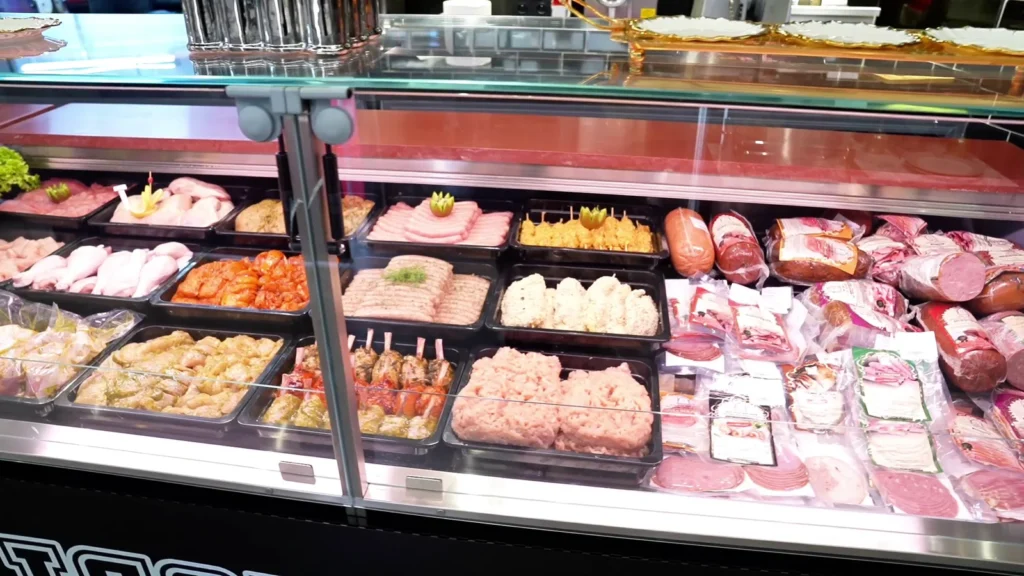
- Pre-packed fresh meat: steaks, ribs, joints for roasting or stewing, cut and packed under film or protective atmosphere. The meat is not processed, only cut and packaged.
- Ready-to-cook meat: seasoned minced meat, skewers, marinated meats, prepared dishes. It has gone through one or more preparation steps.
- Raw cured products: sausages, merguez and other products in casings, to be cooked before eating.
The further you go down this list, the more the product has been worked, and the more important trust in the manufacturer becomes. A rib of beef can partly be judged by eye; ready-to-cook meat, much less so.
That is also why packaging matters: vacuum or protective-atmosphere packaging, done in a controlled workshop and kept in a strict cold chain, preserves the quality of the meat all the way to your kitchen.
The 5 most common concerns about ready-to-cook meat
1. The real composition of the product
How much meat? Which cuts? How much fat, water, binders or additives? Once meat is minced, marinated or stuffed into casings, it becomes impossible to judge by eye. It is often the first source of distrust with ready-to-cook meat.
2. Freshness and the cold chain
A ready-to-cook product is fragile. Between the plant, the truck, the warehouse and the shelf, the slightest break in the cold chain can affect its quality. The consumer only sees the end result and has to hope everything went well before.
3. Production hygiene
The more a product is handled, the more hygiene rules matter. Mincing, mixing, filling casings: each step multiplies contact between the meat, the machines and people’s hands. Consumers want to know whether production is supervised, whether checks are carried out and by whom.
4. Respect for Halal
For many families, it is a non-negotiable condition. But with ready-to-cook meat, who guarantees that all the meat used comes from slaughter that complies with the ritual? The more intermediaries in the chain, the harder the question.
5. The origin of the meat
Who made the product? Where does the meat come from? When several intermediaries follow one another, the information gets lost. We have devoted a whole article to it: the origin of meat, and how to check it.
Why these concerns are legitimate
These questions are not excessive distrust. They are the logical consequence of how many products are made: meat often changes hands between the farmer and the shelf, and each intermediary only sees part of the chain.
For ready-to-cook meat, trust cannot rest on how the product looks. It has to rest on guarantees: an identified manufacturer, an approved establishment, documented checks and a monitored cold chain.
In Morocco, the National Office for Food Safety (ONSSA) is responsible for the health control of food products and for approving establishments that produce food of animal origin.
6 habits for choosing ready-to-cook meat well
A few simple habits let you choose ready-to-cook meat with confidence:
- 1. Read the ingredients list: ingredients are listed from the largest to the smallest amount. Meat should come first, and the list should stay short and understandable.
- 2. Find the manufacturer: a clearly stated name and address are the sign of a producer who stands behind the product.
- 3. Look for the health approval mark: it shows the product was made in an establishment controlled by ONSSA.
- 4. Check the dates: use-by date and production date, when shown. For ready-to-cook meat, choose the latest date if you are not cooking it the same day.
- 5. Look at the packaging and temperature: swollen or damaged packaging, or a product that is not properly cold, are warning signs.
- 6. Keep the cold chain at home: put fresh products in your basket last, use an insulated bag and put them in the refrigerator as soon as you get home.
Storing and cooking ready-to-cook meat properly
Choosing in the shop is only the first step. At home, a few basic hygiene rules let you enjoy your ready-to-cook meat with peace of mind:
- keep it in the refrigerator, in its original packaging, and eat it before the date shown;
- once the packaging is open, cook the product quickly;
- never refreeze a thawed product;
- cook minced meat, sausages and merguez thoroughly to the centre;
- use separate utensils and boards for raw meat and ready-to-eat food.
La Belle Saveur: ready-to-cook meat from an integrated supply chain
La Belle Saveur is the cold cuts and prepared products brand of Groupe EAO, a red meat company in Fez since 1984. Our promise fits in three words: Taste the difference. And that difference starts long before the shelf.
Meat we know, because it comes from us
Groupe EAO is present along the whole chain: breeding and fattening, slaughtering, cutting, processing and distribution. The meat used by La Belle Saveur comes from this integrated supply chain, with 100% traceability from farm to finished product.
Halal slaughter under veterinary control
Our slaughterhouse, Saïs Abattoir, operates under the permanent control of ONSSA-approved veterinary services, in strict respect of the Halal ritual.
Rigorously controlled recipes
Our units are ONSSA approved and follow an HACCP approach: microbiological testing of every batch before release, and continuous monitoring of surfaces, equipment and staff.
A cold chain monitored from end to end
Our products are delivered under controlled temperature by a fleet of refrigerated vehicles fitted with temperature sensors, to keep them fresh all the way to the shop.
To see how we work, visit our Our supply chain page or our Quality & Certifications page.
Where to find La Belle Saveur ready-to-cook meat?
The La Belle Saveur range, raw cured products and ready-to-cook prepared products, is available exclusively at Carrefour. Find our points of sale.
Frequently asked questions about ready-to-cook meat
What is ready-to-cook meat?
It is meat already prepared before sale (minced, seasoned, marinated or filled into casings) that only needs cooking at home: sausages, merguez, seasoned minced meat, skewers or raw cured products.
How can I tell if ready-to-cook meat is good quality?
Read the ingredients list, check that the manufacturer is identified and that a health approval mark appears on the packaging, and check the dates and the condition of the packaging.
Is La Belle Saveur ready-to-cook meat Halal?
Yes. The meat comes from the Groupe EAO supply chain and is slaughtered at Saïs Abattoir in strict respect of the Halal ritual, under the permanent control of ONSSA-approved veterinary services.
How long can ready-to-cook meat be kept?
Always respect the use-by date shown on the packaging and keep the product in the refrigerator. Once opened, cook it quickly.
Where can I buy La Belle Saveur?
La Belle Saveur is available exclusively at Carrefour.
Conclusion: ready-to-cook meat should save you time, not make you doubt
Ready-to-cook meat should make your meals simpler, not worry you. By adopting a few habits in front of the shelf and choosing a manufacturer that controls its supply chain, you can enjoy the convenience without giving up quality. That is what La Belle Saveur strives to guarantee, batch after batch.
To go further, also read our guides on checking the origin of meat and recognising certified khlii.