You pick up a pack of cold cuts or a ready-to-cook product, turn the packaging over, look for the origin of the meat… and find nothing clear. So you put it back on the shelf.
If this sounds familiar, you are one of many consumers. Asked “have you ever avoided a processed meat product because you were not sure of its origin?”, many answer yes. And there is nothing excessive about this reflex: it is caution.
In this guide, we explain why the origin of meat matters so much, why it is so often lost in processed products, and we give you 5 concrete checks to verify it before you buy.
Contents
Why the origin of meat matters so much
The origin of meat is not just a detail on a label. It answers several essential questions for the whole family:
- Safety: was the animal monitored by a veterinarian? Slaughtered in a controlled establishment?
- Respect for Halal: was the slaughter carried out according to the ritual?
- Quality: feed and farming conditions directly affect the taste and texture of the meat.
- Trust: knowing who produced what you eat means knowing who to turn to if you have a question.
In other words, knowing where meat comes from means being able to judge a product on something other than its looks or its price.
Fresh meat and processed meat: two different situations
At the butcher’s, the origin of the meat is often discussed face to face: you know the shopkeeper, you see the carcass, you can ask. Even if the answer cannot always be verified, the direct relationship is reassuring.
With a processed product (cold cuts, seasoned minced meat, sausages, ready-to-cook dishes), that relationship disappears. The meat has been cut, minced, seasoned, sometimes mixed. Only the label is left to tell you where it comes from.
That is why the origin of meat becomes the central question as soon as we talk about prepared products. We have also devoted an article to the habits for choosing ready-to-cook meat at the supermarket.
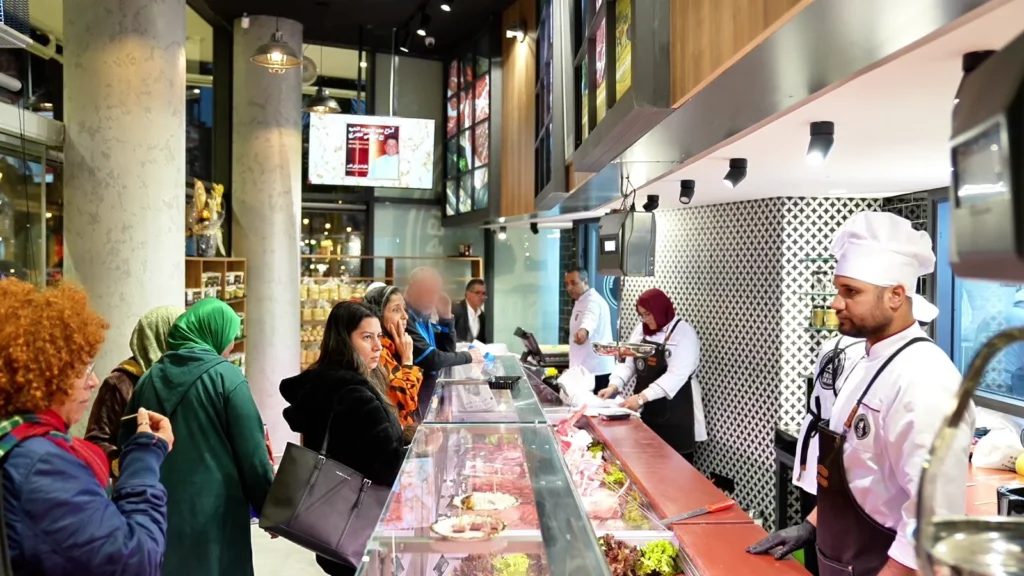
At the local butcher’s: the right questions to ask
For many people, the local butcher remains the benchmark for meat they can trust. Yet when consumers are asked about their concerns when buying from a traditional butcher, the origin of the meat often comes up, alongside shop hygiene and consistent quality.
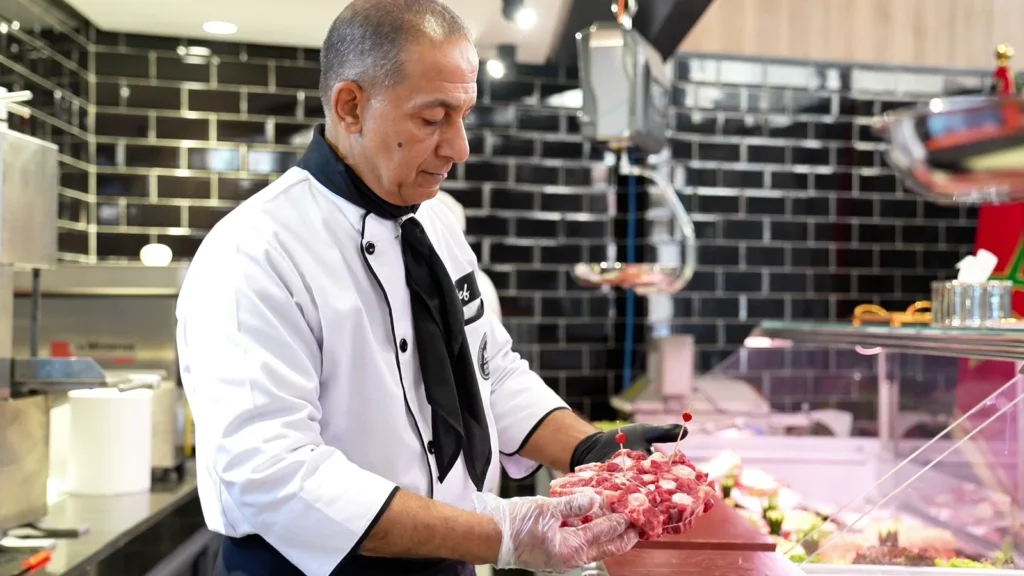
A good butcher has no reason to take offence if you ask questions. On the contrary: it is a chance to show how serious they are. Here are the useful questions:
- Where does this meat come from? Farming region, type of animal, approximate age.
- Where was the animal slaughtered? An approved slaughterhouse under veterinary control is the best guarantee of safety and respect for the Halal ritual.
- How long has the meat been on display? Freshness and cold storage matter as much as origin.
- Which cut do you recommend for my recipe? A butcher who knows their meat can guide you.
Also look at the shop: how clean the display and the counter are, the temperature of the refrigerated displays, how the staff are dressed. These details say a lot about the care given to the meat.
It is in this spirit that Groupe EAO developed Maison Carne, its network of butcher shops, supplied directly by the group’s supply chain. The origin of the meat is known there, from the farm to the display.
Why the origin of meat gets lost in processed products
A chain with many intermediaries
In many channels, the farmer, the slaughterhouse, the cutting workshop, the processor and the distributor are different companies. Each time the baton is passed, part of the information can be lost. At the end of the chain, nobody can tell the product’s full story any more.
Mixed meats
A cured product or a minced preparation can combine meat from several batches, or even several suppliers. The more the meat is mixed, the harder it is to trace its origin.
Labels that say little
The distributor’s name often appears more clearly than the manufacturer’s. As for the origin of the meat itself, it is rarely highlighted. Consumers have to search, and do not always find it.
A lack of transparency that weighs on the whole category
This vagueness does not affect every product, but it fuels general distrust. As a result, even serious manufacturers have to work harder to prove what they claim.
5 checks to verify the origin of meat on the label
Here are the points to look at on a pack to get an idea of where the meat comes from:
1. The manufacturer’s name and address
They should be clearly stated. A manufacturer that names itself stands behind its product and can be contacted. Make sure you distinguish the manufacturer from the distributor: they are not always the same company.
2. The health approval mark
In Morocco, establishments producing food of animal origin are approved by the National Office for Food Safety (ONSSA). This mark shows that the product comes from a controlled establishment.
3. The batch number
It allows the manufacturer to retrieve a product’s production history, and therefore the origin of the meat used. It is the basis of traceability.
4. The animal species
Beef, lamb, poultry: the species should appear in the product name or the ingredients list. If it is unclear, be wary.
5. A contact for your questions
A phone number, an email address, a website. A brand with nothing to hide is happy to answer questions about the origin of the meat it uses.
Traceability: the real answer to the question of meat origin
Labels are useful, but they do not tell the whole story. The best way to guarantee the origin of the meat in a processed product is to control every step yourself. That is the choice Groupe EAO has made since it was founded in Fez in 1984.
La Belle Saveur, our cold cuts and prepared products brand, relies on a fully integrated supply chain:
- Breeding and fattening: rigorous selection of cattle and sheep, strict health monitoring from day one and controlled feed.
- Slaughtering: at Saïs Abattoir, our own unit, under the permanent control of ONSSA-approved veterinary services and in strict respect of the Halal ritual.
- Cutting: at Saïs Découpe, by qualified butchers, under a strict cold chain.
- Processing: rigorously controlled recipes, an HACCP approach and microbiological testing of every batch before release.
- Distribution: through Ras Elma Entrepôt, under controlled temperature, with refrigerated vehicles fitted with temperature sensors.
The result: 100% traceability, from farm to finished product. When you choose La Belle Saveur, the origin of the meat is known, because it has never left our supply chain.
To discover each stage in detail, visit our Our supply chain page and our Quality & Certifications page.
What traceability changes for you
An integrated supply chain is not just a corporate argument. For you, it means concrete benefits:
- Fewer doubts when buying: you know where the meat comes from and who processed it.
- More consistent quality: the same meat, the same recipes, the same checks, batch after batch.
- Halal guaranteed at the source: slaughter takes place in our own slaughterhouse, not at an unknown supplier.
- A single point of contact: if you have a question, the same group answers you, from the farm to the shelf.
Where to find La Belle Saveur?
La Belle Saveur is available exclusively at Carrefour. The next time you turn a pack over to look for the origin of the meat, you will know there is a clear answer. Find our points of sale.
Frequently asked questions about meat origin
How can I find out the origin of the meat in a processed product?
Check the manufacturer’s name and address, the health approval mark, the batch number and the animal species. If in doubt, contact the manufacturer directly.
Why is the origin of meat so important?
It determines the food safety, Halal compliance and taste quality of the product. It also tells you who to contact if there is a problem.
What is an integrated supply chain?
It is an organisation in which a single company controls every stage, from breeding to distribution. Groupe EAO covers fattening, slaughtering, cutting, processing and distribution.
Where does La Belle Saveur meat come from?
It comes from the Groupe EAO supply chain in Fez: breeding and fattening, slaughtering at Saïs Abattoir, cutting at Saïs Découpe. Traceability is guaranteed 100%, from farm to finished product.
Where can I buy La Belle Saveur?
La Belle Saveur is available exclusively at Carrefour.
Conclusion: the origin of meat, a matter of trust
Turning down a product because you do not know where the meat comes from is a healthy reflex. But you should not have to choose between convenience and transparency. With a supply chain controlled from farm to finished product, La Belle Saveur gives you both. La Belle Saveur: taste the difference.
To go further, also read our guides on ready-to-cook meat at the supermarket and certified khlii.