Khlii is one of the treasures of Fez cuisine. Dried, spiced and then preserved in tallow, it has been shared for generations, from breakfast eggs to festive briouats. But between certified khlii, made in a controlled setting, and khlii sold on an unmarked stall, the difference is not always visible at first glance.
Because it is known to keep, many people buy it without asking questions: at the souk, by the roadside or from a passing seller. Yet if you have ever wondered where the meat really came from, how it was prepared or how long it had been sitting in the sun, you are not alone.
The safety and cleanliness of khlii sold on informal or uncertified markets is a real concern for many families. In this guide, we review the 7 most common risks, what certified khlii concretely guarantees, and the right habits for buying with confidence.
Contents
Why khlii is not safe by default
Khlii is an ancestral preserving method. Salt, spices, sun drying and then slow cooking in fat keep the meat for many months. That is what made its reputation in Fez homes long before the refrigerator.
But long shelf life does not mean guaranteed safety. Each of these steps only protects the product if it is properly controlled: healthy meat to begin with, clean drying, cooking at the right temperature and storage protected from contamination.
In an informal channel, nobody can tell you whether these conditions were met. That is exactly what sets certified khlii apart: every step is supervised, checked and documented.
The 7 risks of khlii sold on informal markets
1. Meat of unknown origin
Where does the animal come from? Was it slaughtered in a controlled slaughterhouse, under a veterinarian’s supervision? Was the Halal ritual respected? Without a label or traceability, there is no way to know.
Yet everything starts there: khlii can never be better than the meat it is made from. With certified khlii, the origin of the meat is known and verifiable.
2. Slaughter without veterinary control
Clandestine slaughter escapes all health control. No veterinarian examines the animal before and after slaughter, and there is no guarantee about its health. It is one of the biggest risks, and the least visible to the buyer.
3. Uncontrolled preparation conditions
Khlii involves several steps: cutting, marinating, drying, cooking and preserving in fat. Each one exposes the meat to air, hands and utensils. Without hygiene rules and checks, the risk of contamination grows with every handling.
4. Drying in the open air
Traditional drying is often done on ropes, in the open air. In a careful artisanal setting, it is real know-how. In an informal channel, the meat can stay exposed to dust, insects and pollution for several days.
5. Long exposure on the stall
Product served by hand or by weight from a large open container, summer heat, flies: these are the images many consumers describe to us. Even good khlii can deteriorate if it is poorly stored after it is made.
6. Questionable preserving fat
Fat plays an essential role in preserving khlii. But when you do not know how it was prepared, whether it was reused or how it was stored, you do not know what it is really protecting either. Rancid fat spoils the taste and quality of the product.
7. No information, no recourse
No production date, no manufacturer’s name, no batch number, no contact. If there is a doubt or a problem after purchase, the buyer has no recourse. Certified khlii, on the other hand, comes in identified packaging, with a manufacturer who answers for it.
What certified khlii actually guarantees
Certified khlii does not rely on trust alone: it relies on verifiable guarantees at every stage of production.
- Controlled slaughter: an approved slaughterhouse, veterinary supervision and respect for the Halal ritual.
- Full traceability: the ability to trace the finished product back to the animal and its production batch.
- An HACCP approach: identifying the risk points in production and checking each of them regularly.
- Testing before sale: microbiological checks that approve each batch before it leaves the plant.
- A controlled cold chain: transport in refrigerated vehicles all the way to the point of sale.
- Identified packaging: the manufacturer’s name, product information and a contact for any question.
The role of ONSSA
In Morocco, the National Office for Food Safety (ONSSA) is responsible for the health control of food products. Establishments that produce food of animal origin must hold a health approval or authorisation. Certified khlii is made in an approved establishment that is subject to these official controls.
How to recognise certified khlii: the checklist
Wherever you buy your khlii, get into the habit of checking these few simple points. They are often enough to tell certified khlii from a risky product.
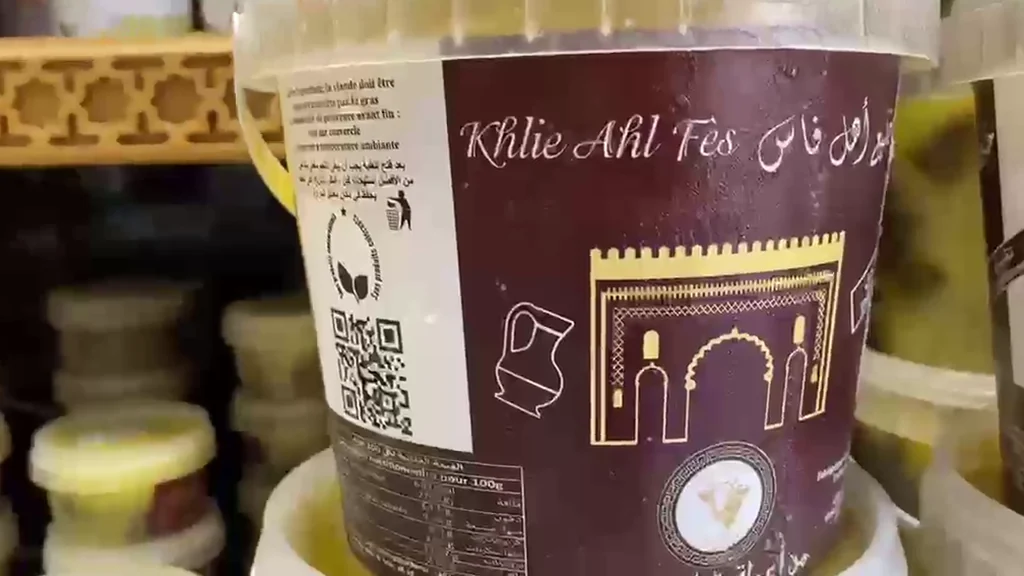
- Is the manufacturer identified? A name, an address, a contact: the first sign of a product someone answers for.
- Is there a health approval mark? It shows that the product comes from an establishment controlled by ONSSA.
- Is the product protected? Avoid khlii left in the open air, exposed to dust or served by hand without protection.
- Are the date and batch shown? They tell you what you are buying and let you report it if there is a problem.
- Is the packaging intact? Damaged, opened or swollen packaging should make you walk away.
- Do the appearance and smell look normal? A rancid smell, an unusual colour or spoiled fat should alert you.
Artisanal khlii and certified khlii: are they compatible?
It is a question we are often asked: can certified khlii keep the taste of homemade khlii? Many people associate certification with an industrial, standardised product without character.
In reality, certification does not touch the recipe. It governs the conditions in which the recipe is made: meat quality, clean premises and equipment, temperature control and batch traceability. The spices, the marinating time, the drying and the slow cooking in tallow remain the gestures of the Fez tradition.
In other words, certified khlii is not a different khlii. It is the same khlii, prepared with the same gestures, but with extra guarantees. Artisanal know-how and food safety are not opposed: they complement each other.
Storing khlii properly at home
Even the best certified khlii must be stored properly once opened. A few simple rules help preserve its quality and taste:
- Follow the instructions on the packaging: storage temperature and use-by date are the first references.
- Keep the meat covered with fat: the fat protects khlii from the air. After each use, make sure the remaining pieces are well covered.
- Always use a clean, dry spoon: moisture and traces of other foods speed up spoilage.
- Close the container properly and keep it away from heat and light, or in the refrigerator once opened.
- Trust your senses: a rancid smell, mould or an unusual texture are signs the product should not be eaten.
These habits apply to any khlii, but they do not replace the quality you start with: a poorly prepared product will not become safe because it is well stored. Hence the importance of choosing certified khlii from the moment you buy it.
Khlie Ahl Fès: certified khlii, from farm to table
Khlie Ahl Fès was born from a simple conviction: you should not have to choose between the authentic taste of Fez khlii and peace of mind. That is why we chose certified khlii, without changing anything in the traditional recipe.
An integrated supply chain since 1984
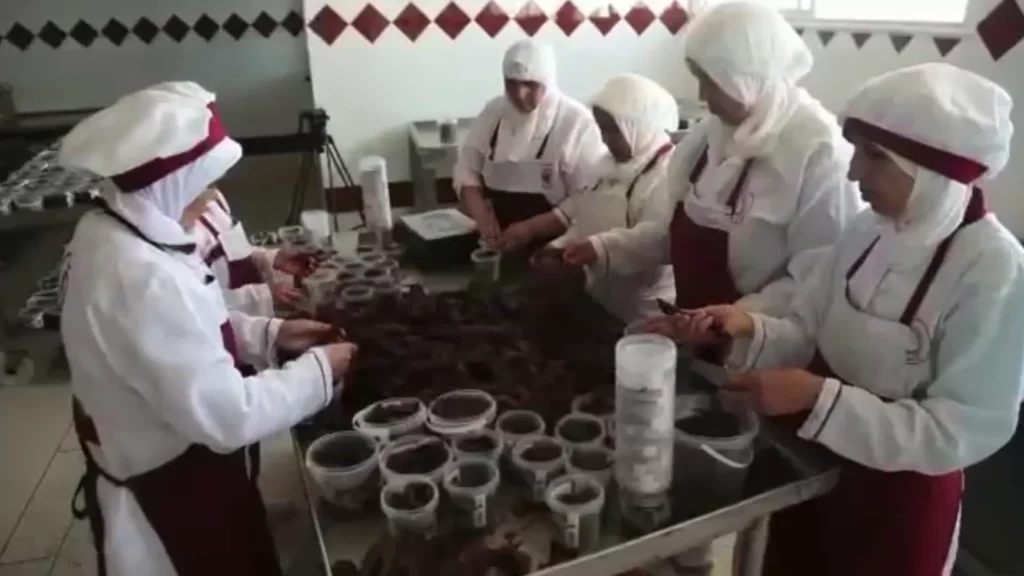
Our khlii is made by Groupe EAO, present in Fez since 1984 across the entire red meat supply chain: breeding and fattening, slaughtering, cutting, processing and distribution. In practice, we control every stage, from farm to finished product.
Guarantees at every stage
- The meat comes from our own slaughterhouse, Saïs Abattoir, where ONSSA-approved veterinary services are present at all times, in strict respect of the Halal ritual.
- Our units are ONSSA approved and follow an HACCP approach, with microbiological testing of every batch before release.
- Traceability is guaranteed 100%, from farm to finished product.
- Distribution is temperature controlled, with a fleet of refrigerated vehicles fitted with sensors.
To discover each stage in detail, see our Our supply chain page and our Quality & Certifications page.
The taste of Fez, in three formats
Certified khlii does not have to lose its soul. Our traditional Fez recipe comes in three formats:
- Classic: the original version, preserved in tallow, for the traditional taste.
- Light: khlii in olive oil, lighter.
- Shredded: already shredded, ready to cook, practical every day.
Find our recipe ideas on the Khlie Ahl Fès page.
Where to buy certified Khlie Ahl Fès khlii?
Khlie Ahl Fès is available at Marjane, Carrefour and Aswak Assalam, and at the Khlie Ahl Fès shop in Fez. Find all our points of sale, or message us on WhatsApp at +212 6 63 54 24 33 with any question.
Frequently asked questions about certified khlii
What is certified khlii?
Certified khlii is khlii made in a health-approved establishment, from meat that comes from controlled slaughter, with traceability and regular checks throughout production.
Is khlii from informal markets dangerous?
Not necessarily, but there is no way to know. Without a known origin, veterinary control or verified hygiene, the risk exists and the buyer has no way to assess it and no recourse.
How can I tell if khlii is certified?
Check that the manufacturer is identified, that a health approval mark appears on the packaging, that the date and batch are shown and that the packaging is intact.
Is Khlie Ahl Fès khlii Halal?
Yes. The meat comes from Saïs Abattoir, the Groupe EAO slaughterhouse, where slaughter is carried out in strict respect of the Halal ritual, under the permanent control of ONSSA-approved veterinary services.
Where can I buy certified khlii?
Khlie Ahl Fès is available at Marjane, Carrefour and Aswak Assalam, and at the Khlie Ahl Fès shop in Fez.
Conclusion: certified khlii, a heritage passed on with care
Khlii is a heritage. It deserves to be passed on with the same care that goes into making it. Choosing certified khlii means keeping the authentic taste of Fez while knowing exactly what is on your plate.
To go further, also read our guides on buying khlii without unpleasant surprises and checking the origin of meat.